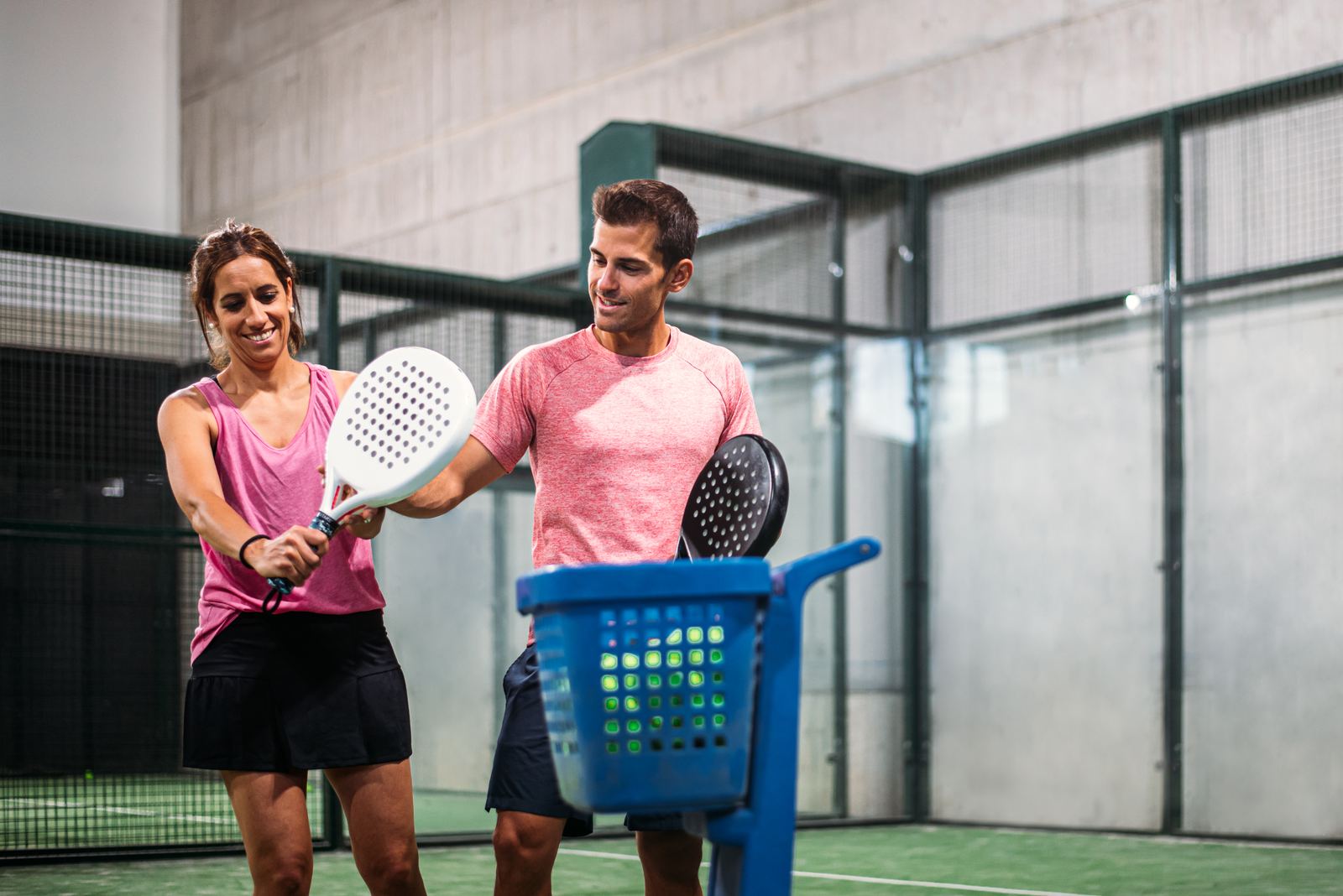
Padel looks like tennis played inside a glass box, and that first impression is basically right. If you have ever held a tennis racquet — or even if you have not — you can play a real point within ten minutes of stepping on a padel court. That accessibility is the sport's superpower, and it is why padel has grown faster than any racquet sport of the last two decades. Here is everything you actually need to know before your first match, learned the way I learned it: by playing.
The court
A padel court is 20 meters long and 10 meters wide (about 66 by 33 feet) — roughly a third the area of a tennis court. It is enclosed on all sides by walls of tempered glass and metal mesh, with a net across the middle, just like tennis. The walls are not out of bounds; they are part of the game, and learning to use them is what turns a beginner into a player.
The scoring
If you know tennis scoring, you know padel scoring: 15, 30, 40, game; six games win a set; best of three sets wins the match. At 40-40 (deuce), most amateur play uses the "golden point" — one deciding point, receiver picks the side — though traditional advantage scoring also exists. Padel is played in doubles, two against two, almost universally. Singles courts exist, but the sport was born social and stays that way.
The serve: underhand, always
This is the rule that surprises tennis players most. The padel serve is underhand: you must bounce the ball once behind the service line and strike it at or below waist height. The serve goes diagonally into the opponent's service box, like tennis, and you get two attempts. What the underhand serve removes in raw power, it returns in rally length — points in padel are longer, more tactical and more fun to watch than a serving contest.
The walls
The defining rule of padel. The ball must always bounce on the ground first — but after that bounce, it can rebound off the glass and stay in play. In practice:
- On your side: after the ball bounces, it may hit your back or side wall — you can still return it. You may even play the ball off your own wall deliberately to send it back over the net.
- Direct to the wall is out: if your shot flies over the net and hits the opponents' wall before touching the ground, you lose the point.
- Defense lives behind the bounce: the classic beginner mistake is attacking every ball at the net line. Watch experienced players: they let deep balls pass, take them off the back glass and reset the point calmly.
Other rules worth knowing
- One bounce, then volley freely. Like tennis, you may volley any ball except the serve return in some club conventions — check the local house rule; official rules allow volleying the return.
- The ball: looks identical to a tennis ball but carries slightly less pressure, which suits the smaller court and wall play.
- The racket: solid, perforated, no strings — foam core with a carbon or fiberglass face, strapped to your wrist by a mandatory safety cord.
- Out of the cage: at advanced levels, a ball smashed out of the court can be chased through the door and returned — the spectacular "salida." Do not worry about this in month one.
Etiquette for your first open match
Padel's culture is its best feature. A few unwritten rules: greet all three other players at the start and tap rackets at the end; call your own lines honestly and replay the point when in doubt; and if you join an open match through an app like Playtomic, declare your level honestly — sandbagging ruins the match for four people, including you.
Why it hooks people
Padel flattens the learning curve without flattening the ceiling. On day one, the walls save your mistakes and rallies last long enough to laugh through. On day five hundred, those same walls create a geometry problem that the best players in the world still have not solved completely. Very few sports give a beginner that much fun and a veteran that much depth on the same 200 square meters. Book a court, borrow a racket, and see for yourself — the Boca Raton options are mapped here. And when someone on court calls for a bandeja or a chiquita, the padel glossary has you covered.